
 Shop now, pay later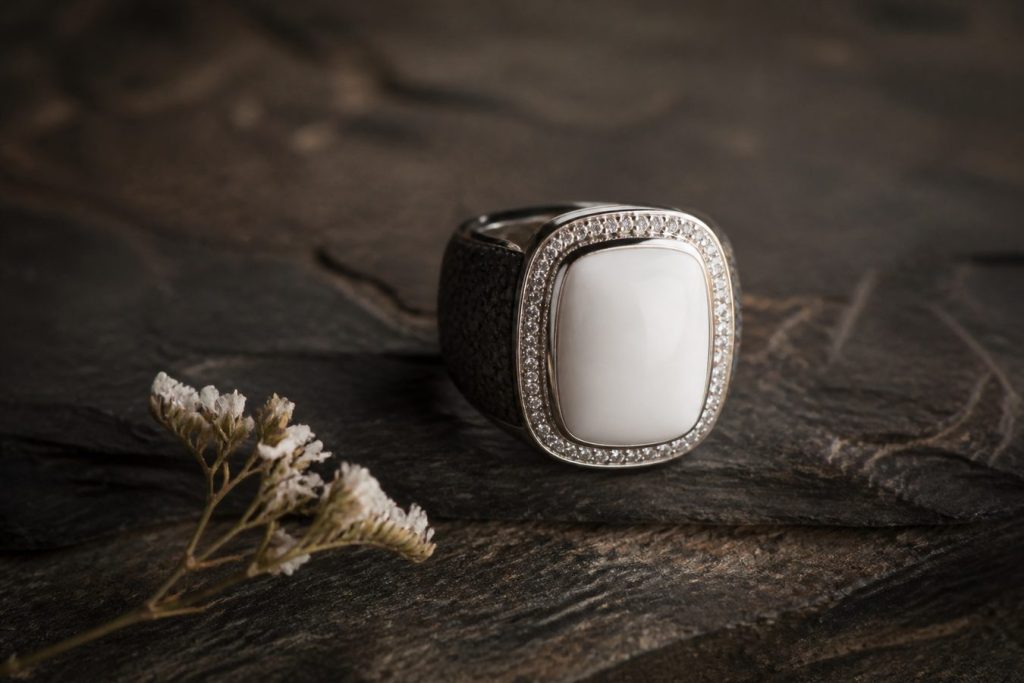
Howlite properties span geology, appearance, and folklore, which is why this white stone shows up so often in silver jewelry. Named after Canadian chemist Henry How, who first described the mineral in 1868, howlite has a chalky look with gray or black veining that resembles porcelain. This guide covers the facts collectors ask about most before buying.
Geology and Physical Properties
Howlite is a calcium borosilicate hydroxide with the chemical formula Ca2B5SiO9(OH)5. It forms as nodules in evaporite deposits, often alongside borax and gypsum. The stone rates 3.5 on the Mohs scale, softer than turquoise (5-6) and much softer than quartz (7), so it needs gentler handling than most gem materials.
Original deposits were found in Nova Scotia, Canada, and larger commercial sources later opened in California, particularly in the Tick Canyon and Lang areas of Los Angeles County. Additional finds have been reported in Mexico, Germany, Russia, and Turkey. Rough howlite is white to cream with dark matrix lines that look like cracked eggshell or spider webs.
The stone has a porous texture and a specific gravity of about 2.53 to 2.59. That porosity matters because howlite readily absorbs dye, which brings us to a point every buyer should know about.
Dyed Howlite and Turquoise Imitations
Because howlite takes color so well, most blue “turquoise” beads sold in craft markets are actually dyed howlite or dyed magnesite. Sellers sometimes label it “turquenite,” “white turquoise,” or “buffalo turquoise,” none of which are recognized gemological terms for real turquoise. A quick acetone swab on an inconspicuous spot will lift dye from howlite but not from genuine turquoise.
Dyed howlite also mimics coral (red), lapis lazuli (deep blue with pyrite-like flecks painted on), and sodalite. If you are shopping for authentic stones set in sterling silver jewelry, ask the seller directly whether the stone is natural howlite or a dyed simulant of another gem. Reputable stores disclose treatments in writing.
Natural, undyed howlite has its own quiet appeal. The bone-white body with gray webbing pairs well with oxidized silver and darker gemstone accents like onyx or garnet.
Metaphysical Meaning and Everyday Uses
In crystal healing traditions, howlite is considered a calming stone associated with the crown chakra. Practitioners describe it as helpful for reducing stress, quieting an overactive mind, and easing anger, both felt inward and directed from others. These claims are metaphysical and not scientifically verified, but they shape how the stone is marketed and worn.
Common uses include tumbled palm stones kept on a desk, beaded bracelets worn during meditation, and pendants placed near the throat or heart. Some users tuck a small piece under a pillow with the belief it aids sleep. Whether or not you subscribe to the folklore, the matte white surface is visually restful, which may explain part of the appeal.
Howlite also carries symbolic weight in gift-giving. It is often chosen for friends going through transitions, exam periods, or grief, paired with a short note about patience. For jewelry lovers building a stone collection, our sterling silver jewelry range includes howlite pieces alongside other natural stones for layering.
Care, Cleaning, and Buying Tips
Howlite’s low hardness and porosity mean it scratches on contact with harder gems and can stain if exposed to perfume, lotion, or household cleaners. Store it separately from quartz, topaz, and diamond pieces. Wipe with a soft, slightly damp cloth and dry immediately; skip ultrasonic cleaners and steam.
Avoid soaking dyed howlite in water, since prolonged contact can leach color. Even natural howlite should not be submerged for long periods because water can penetrate the porous structure and weaken it over time. Remove howlite jewelry before showering, swimming, or gardening.
When buying, look for even matrix patterns, no chips at drill holes, and consistent color across a strand. Cabochons should be polished smooth without pitting. A small loupe helps you check for filled cracks, which are common in lower-grade material and can affect long-term durability.
Frequently Asked Questions
Is howlite a real stone or man-made?
Howlite is a genuine mineral, a calcium borosilicate hydroxide first described in 1868. It is often dyed to imitate turquoise, but the base stone itself is natural and mined from evaporite deposits in Canada, the United States, and elsewhere.
How can I tell howlite from real turquoise?
Howlite is much softer at 3.5 Mohs versus turquoise at 5-6. Dyed howlite often shows color pooling in the matrix veins, while turquoise color runs throughout. An acetone swab will lift dye from howlite but not from genuine turquoise.
Can howlite get wet?
Brief exposure to water is fine for natural howlite, but avoid soaking. The stone is porous and can absorb moisture, which weakens it. Dyed howlite may bleed color when wet, so keep it away from showers and pools.
What chakra is howlite associated with?
In crystal healing tradition, howlite is linked to the crown chakra and sometimes the root chakra. It is used for calming the mind, reducing stress, and supporting sleep and meditation practices.
Ready to add a natural howlite piece to your collection? Browse our sterling silver settings and see how the stone reads in person.