
 Shop now, pay later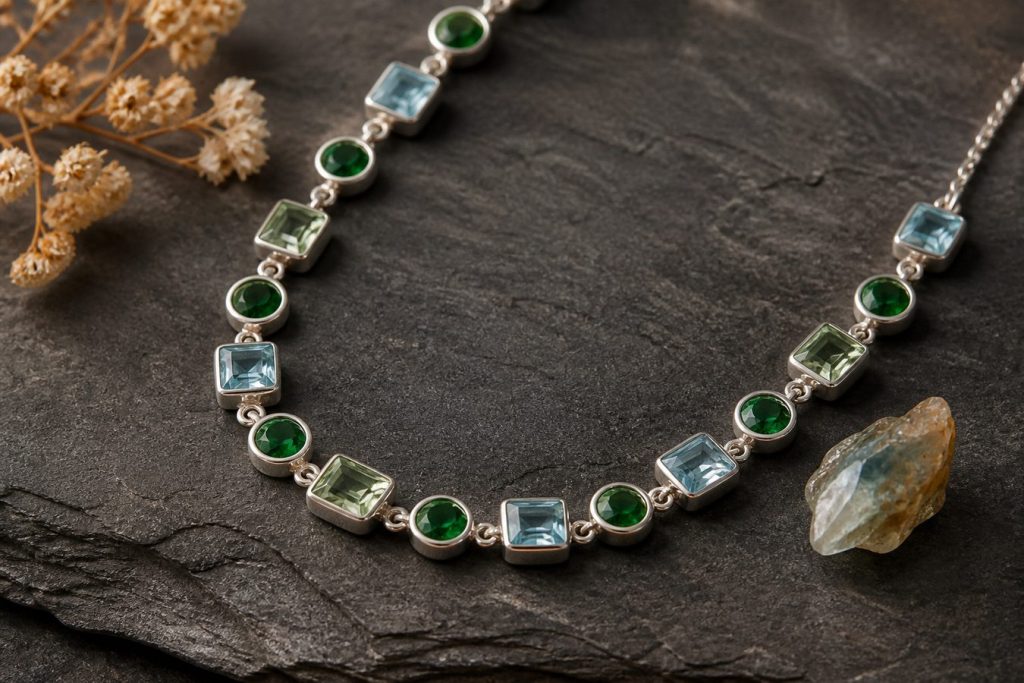
The best fashion jewelry in 2026 blends trend-driven shapes with materials that hold up past one season. At SilverRush Style, we’ve sold real natural-stone pieces set in sterling silver jewelry since 2005, so this guide leans on what actually wears well. Expect specifics on stones, metals, and sizing, not marketing fluff.
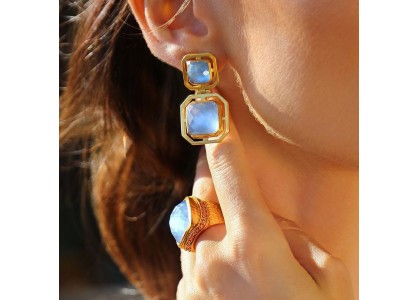
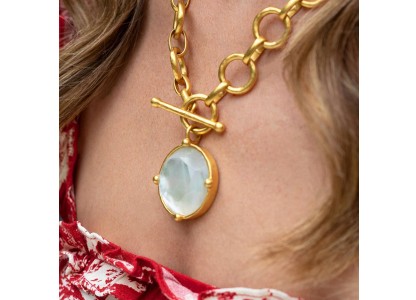
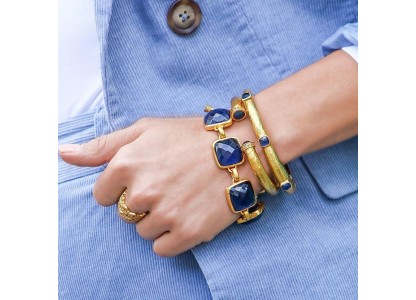
Fashion jewelry today splits into two camps: base-metal costume pieces built for a look, and semi-fine pieces built with .925 silver and genuine gemstones. The second category costs a bit more up front and lasts years longer, which is where our focus sits.
What Makes Fashion Jewelry Worth Buying
Start with the metal stamp. Sterling silver is 92.5% silver and 7.5% copper by weight, marked .925 or STERLING inside a ring band or on a clasp tag. Anything unmarked, or stamped with vague terms like “silver-tone,” is plated base metal and will show wear at friction points within months.
Next, check the stone. Natural gemstones have inclusions, color zoning, and a cool feel against the skin, while glass and resin warm up fast and look uniform under a loupe. Reputable listings should name the stone, its origin when known, and whether it’s been treated (heat, dye, stabilization).
Finally, look at construction. Prong tips should sit flush against the stone, bezels should have no gaps, and chain links should be soldered closed on necklaces you plan to wear daily. These details separate a $30 piece that lasts two weeks from a $60 piece that lasts a decade.
Best Stones for Everyday Fashion Jewelry
Hardness matters because rings and bracelets take the most impact. The Mohs scale runs 1 to 10, and daily-wear stones should ideally sit at 6.5 or higher. Below that, expect visible scratches and chipped facets within a year of regular wear.
Turquoise (Mohs 5–6)
Turquoise is a hydrated copper aluminum phosphate, mined mainly in Arizona, Nevada, Iran, and China. Sleeping Beauty turquoise from Globe, Arizona shows the clean robin’s-egg blue collectors want, while Kingman material carries darker matrix veining. Keep it away from lotion and perfume, since the stone is porous and stains easily.
Amethyst and Citrine (Mohs 7)
Both are quartz varieties, with amethyst colored by iron and irradiation and citrine by heat-treated amethyst or natural iron content. Brazilian and Uruguayan amethyst dominates the market, and the deep “Siberian” purple grade commands the highest prices. At Mohs 7 they resist scratches from household dust, which is why quartz jewelry stays popular for daily rings.
Garnet, Peridot, and Topaz (Mohs 6.5–8)
Garnet ranges from the dark red almandine to the bright green tsavorite from Kenya and Tanzania. Peridot, a magnesium iron silicate, comes largely from Arizona’s San Carlos Reservation and Pakistan, holding a Mohs 6.5–7. Blue topaz, an aluminum silicate at Mohs 8, is almost always irradiated from colorless material to reach London Blue or Swiss Blue tones.
Building a Fashion Jewelry Rotation That Works
A rotation of six to eight pieces covers most outfits without cluttering a jewelry box. Two pairs of earrings (one stud, one drop), two necklaces at different lengths, two rings, and a bracelet or two will carry you across work, casual, and evening looks. Sticking to one metal tone within an outfit reads cleaner than mixing silver and gold, though layered mixing works if the pieces share a stone family.
For necklaces, 16 inches sits at the collarbone on most adults, 18 inches falls just below, and 20–24 inches works for layering over sweaters and blouses. Ring sizing shifts with temperature and time of day, so measure your finger in the afternoon at room temperature for the truest fit. Our full range of sterling silver jewelry lists exact dimensions on every product page for this reason.
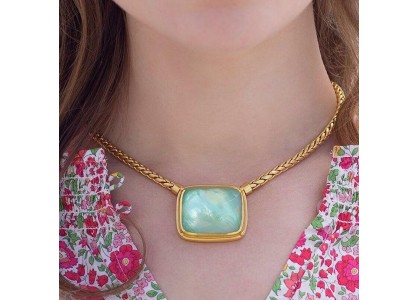
Stacking rings have held their spot as one of the top fashion categories since around 2018, and they still lead sell-through in 2026. Three thin bands on one finger read modern without looking overloaded, and mixing a plain band with two stone-set bands adds texture. Pendant necklaces in the 18-inch range remain the second-highest volume category we ship.
How to Spot Quality Before You Buy
Read the product description for four data points: metal purity stamp, stone name and treatment disclosure, total carat or millimeter measurements, and country of origin for the stone. A listing missing any of these is either understocked on information or hiding something. Legitimate sellers publish this because gem lab standards (GIA, AGTA) require disclosure of treatments like fracture filling, dyeing, and irradiation.
Photos should show the actual piece, not a stock render, and ideally include a scale reference like a coin or ruler. Reviews with photos matter more than star counts, since a 4.9 average across 12 reviews tells you less than 50 reviews with visible wear photos. Return policies of 30 days or longer signal a seller who expects the piece to hold up under inspection.
Price ranges give a rough sanity check. A sterling silver ring with a 6mm genuine amethyst should land between $40 and $90 depending on stone grade and setting complexity. Anything under $20 for that same description is almost certainly synthetic quartz or glass in plated brass.
A Note on Care and Longevity
Sterling silver tarnishes when sulfur in the air reacts with the copper alloy, forming silver sulfide on the surface. A soft polishing cloth removes light tarnish in about 30 seconds per piece, and storing jewelry in anti-tarnish bags between wears slows the process by months. Skip ultrasonic cleaners for pieces with soft or porous stones like turquoise, opal, and pearl.
If you’re building a rotation from scratch or filling gaps, browse our collection for stone specs and sizing on each listing. Questions on a specific piece are welcome — we’ve been answering them for 21 years.