
 Shop now, pay later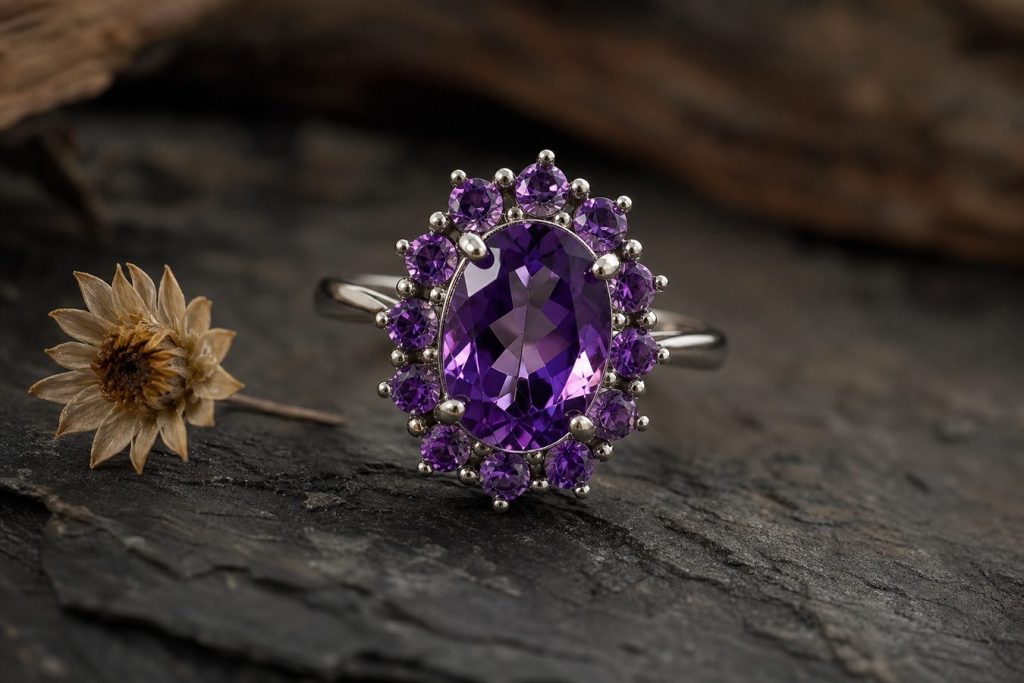
The amethyst birthstone is the purple variety of quartz assigned to February babies, and it has been prized for more than 2,000 years. Its color ranges from pale lilac to deep royal violet, and the finest material shows red or blue flashes under light. This guide covers what amethyst actually is, where it comes from, what it symbolizes, and how to wear it well.
What Amethyst Is (and Why It’s Purple)
Amethyst is a macrocrystalline quartz with the chemical formula SiO₂, colored by trace iron and natural gamma irradiation inside the Earth. It measures 7 on the Mohs hardness scale, which makes it durable enough for daily wear in rings, pendants, and earrings. Heat above roughly 300–400°C can fade the purple or turn the stone yellow, which is how most commercial citrine is produced.
The name comes from the Greek amethystos, meaning “not drunken.” Ancient Greeks believed the stone protected its wearer from intoxication, and Roman drinking cups were sometimes carved from it. Medieval European soldiers wore amethyst amulets in battle, and it has appeared in British crown jewels and Catholic bishops’ rings for centuries.
Color grading matters more than size with this gem. Trade names like “Siberian” (deep purple with blue and red flashes), “Uruguayan” (dark with blue undertone), and “Rose de France” (pale lilac) describe color rather than strict origin. When shopping, hold the stone in daylight and under warm indoor light — quality amethyst holds its color in both.
Where Amethyst Comes From
Brazil produces the largest volume of amethyst on the market today, mostly from the states of Rio Grande do Sul and Bahia, where it forms inside basalt geodes. Uruguay yields smaller but often darker crystals from the Artigas region, and these command higher prices per carat. Zambia’s Kariba mine has been a steady source of deeply saturated stones with reddish flashes since the 1950s.
Other notable deposits sit in Bolivia (the Anahí mine, also known for bicolor ametrine), Madagascar, Russia’s Ural Mountains, and the Thunder Bay region of Ontario, Canada. The historic Siberian mines that gave the trade name to top-color amethyst were largely depleted by the early 20th century. Modern “Siberian-grade” material now comes mostly from Zambia and select Uruguayan lots.
Our amethyst jewelry uses natural stones sourced through established cutting centers in Jaipur and Bangkok, where rough is faceted by hand. We do not sell synthetic or dyed amethyst, and any heat treatment is disclosed on the product page when applicable.
Meaning, Symbolism, and Who It Suits
Amethyst is traditionally linked to clarity of mind, calm, and sobriety in judgment — the through-line from its Greek etymology to its modern reputation. It is the birthstone for February, the zodiac stone often associated with Pisces, and the traditional gift for 6th and 33rd wedding anniversaries. Purple has signaled royalty since Roman times, partly because natural purple dye was rare and expensive.
The stone works for most skin tones because purple sits between the warm and cool halves of the color wheel. Deeper stones read as formal and pair well with evening wear, while pale Rose de France cuts suit everyday layering. Amethyst also complements diamond accents, pearls, and other purple or blue gems like tanzanite and iolite.
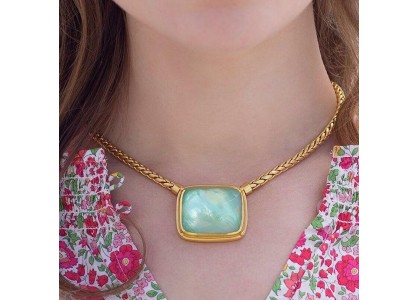
If you are buying a gift, ring sizes and pendant lengths are the two variables worth checking in advance. A standard 18-inch chain sits at the collarbone on most adults, and US ring sizes 6–7 cover the majority of women’s fingers.
Care, Setting, and Wearing Amethyst
Clean amethyst with warm water, mild dish soap, and a soft toothbrush; avoid ultrasonic and steam cleaners if the stone shows visible inclusions or has been fracture-filled. Prolonged sun exposure can fade color over years, so store pieces in a pouch or lined box away from windowsills. Remove rings before gardening, gym sessions, and household cleaning to protect both the stone and the setting.
Sterling silver is a natural partner for amethyst because the cool gray metal deepens the perceived saturation of the purple. Our sterling silver jewelry is stamped .925, meaning 92.5% pure silver alloyed with 7.5% copper for strength. Rhodium or anti-tarnish finishes are noted per item, and prong settings are the most secure option for faceted amethyst above 8mm.
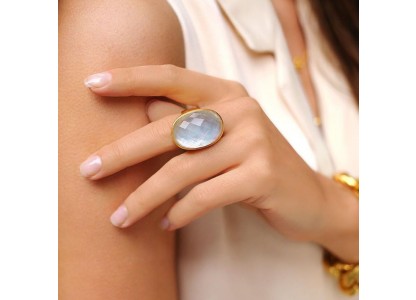
For everyday wear, bezel settings protect the girdle of the stone from chips, while cocktail rings with larger center stones look best reserved for occasions. Studs and small pendants (4–6mm) are the easiest entry point if you are buying amethyst for the first time. Layer a February birthstone pendant with a plain silver chain for a quiet nod to the tradition without overstyling.
Ready to shop?
Browse our February birthstone collection when you have a few minutes, and reach out with sizing or stone questions before you order. We have been cutting, setting, and shipping natural-stone silver jewelry from the US since 2005.