
 Shop now, pay later
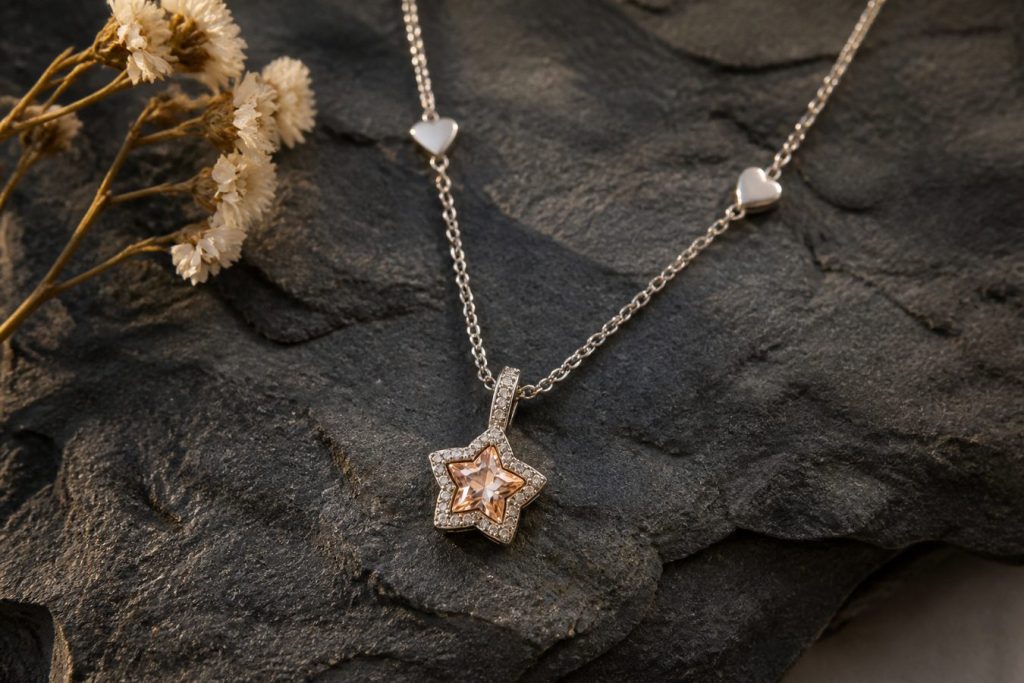
The carnelian color spans a warm band of oranges, reds, and red-browns that has drawn jewelers and carvers for thousands of years. This guide breaks down the shades you will actually see in the market, what causes them, and how to match them to your skin tone and wardrobe. At SilverRush Style, we have been setting natural carnelian in sterling silver since 2005, so the notes below come from hands-on sorting of real stones.
What Color Is Carnelian, Really?
Carnelian is a translucent variety of chalcedony, a microcrystalline form of quartz with the chemical formula SiO2. Its color runs from pale peach and bright orange to deep reddish-brown, and the stone is usually translucent enough to glow when held to light. The warm hue comes from iron oxide impurities, mainly hematite, dispersed through the silica structure.
On the Mohs scale, carnelian sits at 6.5 to 7, the same hardness range as other quartz varieties. That makes it durable enough for daily-wear rings, pendants, and earrings when set properly. Most rough comes from India, Brazil, Uruguay, Madagascar, and Botswana, with historic sources in Germany and the Deccan region supplying antique pieces.
Carnelian vs. Sard
Sard is the darker, browner cousin of carnelian, and the boundary between the two is a matter of convention rather than chemistry. Gemologists generally call lighter orange-to-red material carnelian and reserve sard for the deeper brown-red stones. Both share the same SiO2 composition and iron-oxide coloring agent.
The Full Carnelian Color Range
Understanding the shade spectrum helps when you shop online, since photos can shift under studio lights. Here is what each tier actually looks like in hand.
Peach and Pale Orange
Light carnelian reads as soft peach or apricot, often with high translucency and a honeyed glow. These stones carry less iron oxide and pair well with rose gold tones, warm neutrals, and summer wardrobes. They are common in Indian material and often appear in faceted cuts because the clarity shows off well.
Classic Orange to Red-Orange
The shade most people picture when they hear “carnelian” is a saturated orange with a red pull, close to the color of a ripe persimmon. This mid-range tone is the most sought after and the easiest to match with sterling silver, which cools the warmth and lets the orange read cleanly. Brazilian and Uruguayan rough tend to produce this classic shade.
Deep Red and Red-Brown
Darker carnelian moves into brick, blood-orange, and cognac tones. Historically, much of this deeper material was heat-treated chalcedony, since controlled heating of lighter chalcedony converts yellowish iron compounds into red hematite. Heat treatment of carnelian has been documented since Roman times and is considered standard and stable in the trade.
What Causes Carnelian’s Color
The coloring agent is iron, specifically iron oxide in the form of hematite (Fe2O3) and sometimes goethite. These compounds sit as microscopic inclusions within the silica, scattering light and producing the warm range from orange to red. The higher the iron oxide content and the more oxidized the iron, the deeper the red.
Natural sunlight exposure can also deepen color over long periods, which is why ancient intaglios often show richer tones than freshly mined rough. Heat treatment speeds up the same oxidation process under controlled conditions. You can browse examples of heat-stable natural stones set into our sterling silver jewelry collection to see how different shades read in finished pieces.
How to Spot Dyed Imitations
Some sellers pass off dyed agate as carnelian. A quick test: natural carnelian shows a cloudy or striped distribution of color when held to a strong light, while dyed agate often shows concentrated color along fractures or a suspiciously even saturation. Reputable sellers disclose treatment, and standard heat treatment should always be noted on the listing.
Choosing a Carnelian Shade for Jewelry
Matching carnelian to skin tone is straightforward because the stone is a warm color across its range. Cool undertones tend to look sharpest with lighter peach and classic orange carnelian, while warm and olive undertones carry the deeper red-brown shades well. Sterling silver settings work across the range because the cool metal balances the warmth of the stone.
For everyday rings, a mid-saturation orange holds up best because it hides minor surface wear and reads true under office lighting. Statement pendants and cocktail rings are where the deeper red-brown shades shine, since the larger stone surface lets the color read with real depth. Earrings often look best in the translucent peach range because light passes through and the stones appear to glow against the neck.
Care Notes That Preserve Color
Carnelian is stable under normal wear, but prolonged exposure to high heat or harsh chemicals can dull the surface polish. Clean with mild soap, warm water, and a soft cloth, and avoid ultrasonic cleaners if the stone has visible fractures. Stored away from direct sun between wears, a good carnelian will hold its color for generations, as the antique Roman and Egyptian intaglios still in museum collections demonstrate.
If you are shopping for a specific shade, our catalog lists each piece with close-up photos under neutral lighting so you can judge the actual carnelian color before you buy. Reach out with questions about matching a stone to a setting, and we will walk you through what we have in stock.