
 Shop now, pay later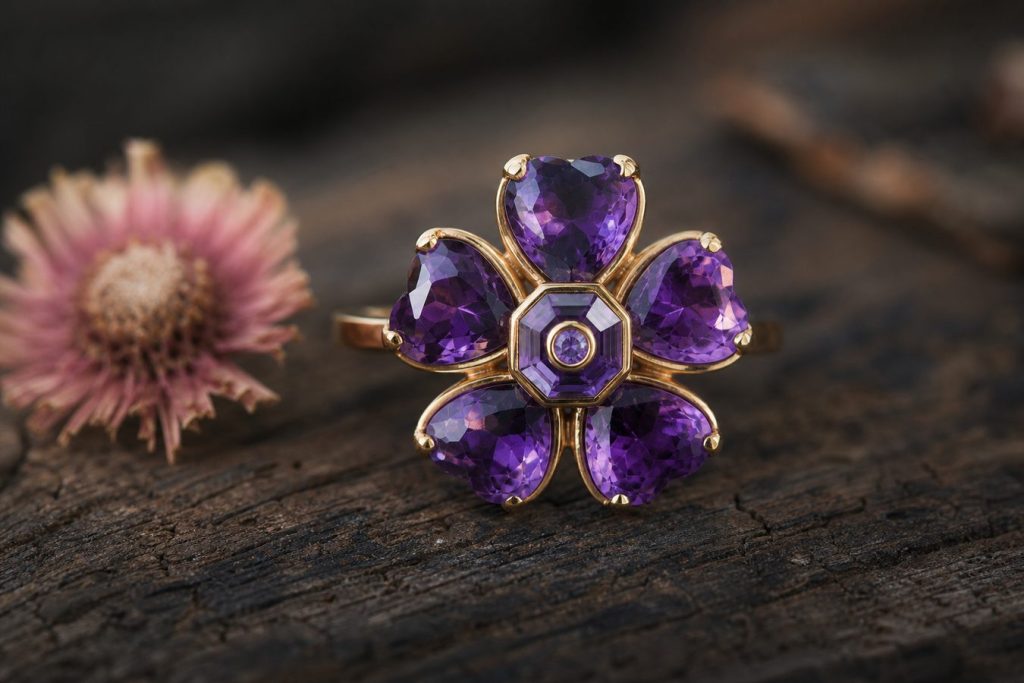
The 131 carat amethyst value question comes up often when collectors inherit a large purple stone or spot one in an estate listing. A rough answer: most 131-carat natural amethysts sell between $130 and $1,500, with top-color Siberian-grade material reaching higher. The spread is wide because color saturation, clarity, and cutting quality do more work than raw weight.
Amethyst is the purple variety of quartz (SiO2), with a Mohs hardness of 7 and a specific gravity near 2.65. Brazil, Uruguay, Zambia, and Bolivia supply most commercial rough. At 131 carats, you’re looking at a stone roughly 30–35 mm across, which puts it firmly in collector or statement-pendant territory rather than standard ring size.
What Sets the Price of a 131 Carat Amethyst
Color drives value more than any other factor. Deep reddish-purple with even saturation, historically called Siberian grade, commands $20–$50 per carat at large sizes. Lighter lilac quartz, like the Brazilian oval amethysts sold in the 131-carat range on marketplaces, typically moves at $1–$5 per carat.
Clarity matters at this scale because inclusions become visible to the naked eye. Fine amethyst should be eye-clean under normal light. Veils, color zoning, or clouding drop per-carat pricing by 30–60% compared to clean material of the same hue.
Cut quality is the third lever. A well-proportioned oval or cushion with good symmetry and no windowing holds value; a native cut with a shallow pavilion loses light and sells at wholesale rough prices. For our amethyst jewelry, we source cut stones that show even color across the crown rather than dark bow-tie zones.
Realistic Price Ranges by Grade
Using published amethyst pricing charts and recent auction data through mid-2026, here’s what a 131-carat stone tends to fetch:
- Commercial lilac (Brazilian, light purple): $130–$650 total, or about $1–$5 per carat
- AA medium purple, eye-clean: $650–$1,300, or roughly $5–$10 per carat
- AAA deep purple with red flash: $1,300–$4,000, sometimes higher for Siberian color
- Uruguayan deep grape, well-cut: $2,500–$6,500 for exceptional material
Retail markups run 2x to 4x over wholesale. A pendant setting adds material and labor cost: 21 grams of 18k gold at mid-2026 spot prices adds roughly $1,400–$1,600 in metal alone, before design work. That’s why a 131-carat amethyst in an 18k gold pendant bought in Amsterdam in 1992 might appraise at $2,000–$5,000 today depending on stone grade.
How to Verify What You Have
Start with a refractive index test at a local gem lab. Amethyst reads 1.544–1.553 with a birefringence of 0.009. Synthetic hydrothermal amethyst has been on the market since the 1970s and can only be separated by advanced testing at labs like GIA or AGL, which charge $75–$250 for a colored stone report.
Check for heat treatment. Most commercial amethyst is untreated, but some material is heated to lighten or shift color toward citrine. Heat-treated stones sell at a 20–40% discount to untreated equivalents of the same visible grade.
Weigh and measure the stone. If a jeweler quoted 131 carats but the piece measures under 28 mm, the weight claim is likely off or the stone sits deep in the setting. Density math on quartz is reliable: a well-cut 131-carat oval amethyst should measure roughly 32 x 24 x 16 mm. Our team at SilverRush Style works with graded quartz across our sterling silver jewelry collection, so we see these measurements weekly.
Selling, Insuring, or Keeping It
If you plan to sell, get two independent appraisals. Retail replacement value (what insurance covers) runs 2–3x higher than fair market value (what a buyer pays). A stone with a $3,000 insurance appraisal often sells for $900–$1,200 through a dealer or auction.
eBay and Etsy comparables show 131-carat lilac Brazilian amethysts listed between $150 and $500, with actual sales landing near the low end. Heritage Auctions and similar houses handle finer material; their 2024 and 2025 records show large deep-purple amethysts clearing $15–$40 per carat when accompanied by lab reports.
For insurance, ask for a written appraisal that specifies color grade, clarity, cut quality, measurements, and any treatments. Update it every three to five years, since amethyst pricing has stayed relatively flat but gold content in settings tracks bullion.
What This Means for Buyers
A 131-carat amethyst is a display stone or centerpiece pendant, not a daily-wear ring. At 30+ mm, it catches on clothing and takes hits that even Mohs 7 hardness can’t fully absorb. Quartz chips at the girdle when struck against harder surfaces.
If you want the color and presence without the size, a well-cut 5–15 carat amethyst in a protective bezel gives you deeper saturation per dollar and holds up to regular wear. We stock graded amethyst in that range set in sterling silver, and we’re happy to answer questions on specific stones or grading if you’re weighing a purchase or an inheritance appraisal.